
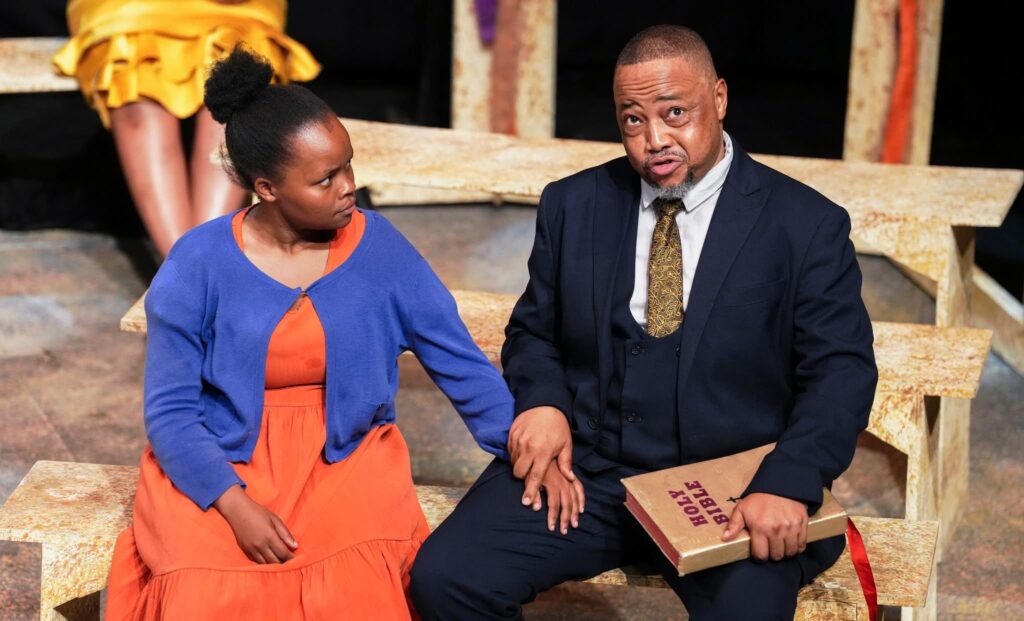
Ka Lebitso La Moya, written by acclaimed playwright and director MoMo Matsunyane, is a shining example of this legacy. Recently staged at the Ramolao Makhene Theatre (Market Theatre Square) due to popular demand, the production continues to stir deep conversations and emotions among audiences across the country.
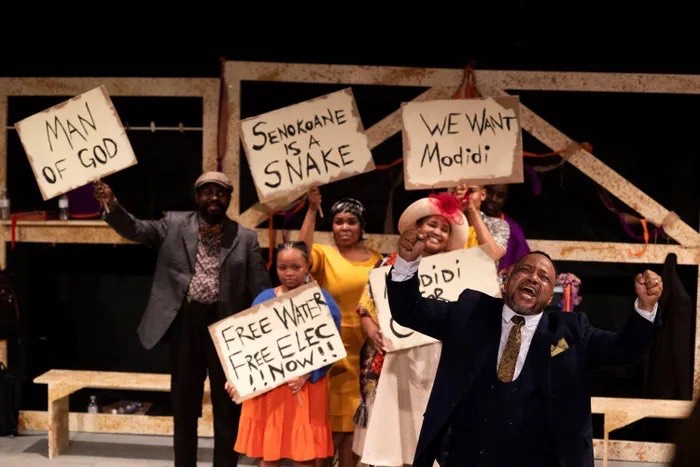
Set in the fictional township of Ha Satane, the play offers a gripping and layered narrative of a community caught in the throes of poverty, crime, and spiritual longing. The arrival of a charming and seemingly well-intentioned priest brings a flicker of hope to the people but this light is quickly overshadowed by a chilling secret hidden beneath his soft-spoken demeanor.
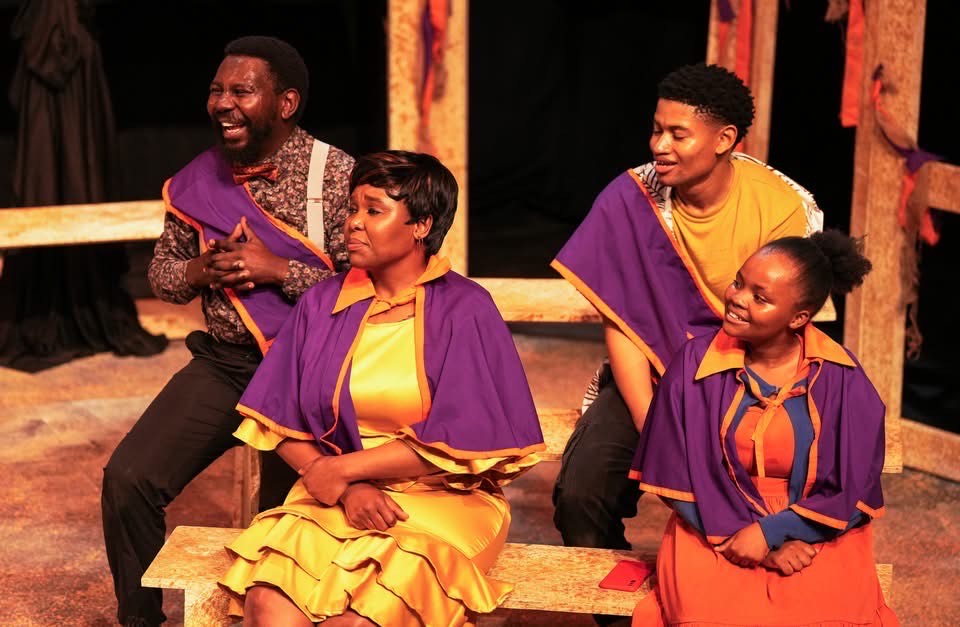
At its core, Ka Lebitso La Moya is a searing exploration of power, manipulation, indoctrination, sexual violence, and the resilience of Black communities. It doesn’t shy away from difficult truths. Instead, it chooses to confront them with poetic honesty and theatrical brilliance.
The ensemble cast sets the tone from the opening scene with incredible synergy. The performers are not just acting they breathe life into every line and movement. Their timing is impeccable, and the ensemble’s energy flows effortlessly from scene to scene, often using a single word or gesture to create poetic transitions that carry emotional weight.

Josias ‘Dos’ Moleele, as the enigmatic priest, delivers a nuanced performance that is both haunting and captivating. His ability to hold the audience in suspense while slowly revealing the darker aspects of his character is a masterclass in performance. Opposite him, Siyasanga Papu (as the priest’s wife) and Khutjo Green (as Dipuo) shine with depth and emotional clarity. Their portrayals contribute richly to the atmosphere of Ha Satane, a community that feels real, layered, and heartbreakingly familiar.
Direction and Production
Directed with precision and courage by MoMo Matsunyane, and produced by Bonono Kreativez and Matsunyane herself, the play succeeds in balancing complex themes with human intimacy. The direction ensures that each scene flows seamlessly into the next, not only narratively but emotionally. The transitions are not just technical they are symbolic, spiritual, and deeply reflective.
Theatre That Challenges and Heals
Winning a Naledi Theatre Award is no small feat, and Ka Lebitso La Moya earns its place among South Africa’s most compelling theatrical works. It is a play that challenges the audience to look inward and outward to confront how power operates in our personal lives and within the systems meant to protect or uplift us.
By fearlessly addressing the realities of spiritual manipulation and sexual violence, the play gives voice to silenced stories and invites healing, not through denial or avoidance, but through confrontation and communal reckoning.