
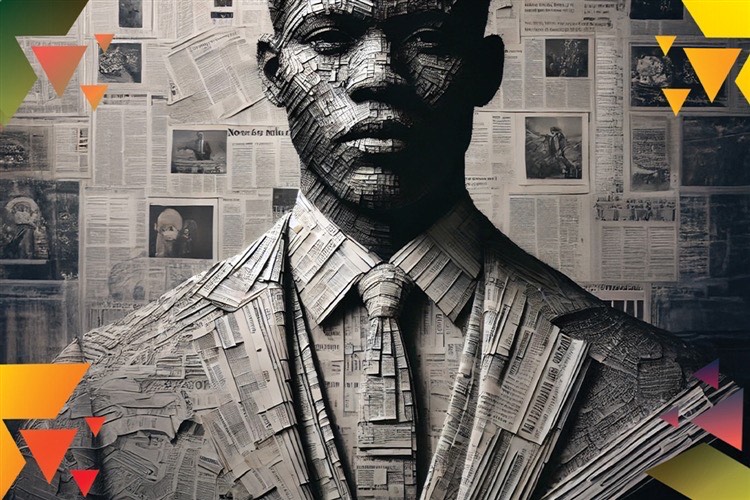
Staged at the South African State Theatre during the Youth Expression Festival, The Newspaper is a bold and emotionally charged physical theatre production written and directed by Lindokuhle Mdlozini Hadebe. The play confronts the heavy and often unspoken realities of men’s mental health and suicide in society and it does so without uttering a single word.
A Story Told in Silence
What makes *The Newspaper* striking is its complete reliance on physical storytelling. There is no dialogue, no music, no narration only bodies, expressions, and raw emotion. Through movement and stillness, the performers communicate the internal battles many men face under societal pressure to remain strong and silent.
This silence becomes symbolic in itself. In a world where men are often discouraged from expressing vulnerability, the absence of words mirrors the emotional suppression many experience daily. The production becomes a theatrical embodiment of the phrase, “Men suffer in silence.”

Ensemble, Timing, and Physical Strength
The ensemble work in this production is exceptional. Every performer moves with precision and awareness, creating a unified rhythm on stage. The timing of each movement is deliberate and synchronized, demonstrating discipline and strong collaboration.
The physical demands of the production are intense. The heavy, hectic movements require significant stamina and strength. It is clear that to be part of this production, one must be physically fit and emotionally invested. The performers do not simply move; each action carries intention and meaning.

Symbolism and Staging
Symbolism plays a central role in *The Newspaper*. The storytelling begins even before the audience takes their seats. Men scattered around the foyer set the tone, immersing viewers in the narrative before the formal performance starts. Once inside, the audience is seated in a central-stage arrangement, creating an intimate and almost confrontational atmosphere. The placement suggests that the audience is not merely observing the story they are surrounded by it.
The use of newspapers throughout the play is particularly thought-provoking. Interestingly, most of the stories being read from the newspapers appear to focus on men. Whether intentional or not, this detail reinforces the theme of how men’s struggles, failures, and tragedies often become public headlines, yet their emotional pain remains private and unheard.
The heavy physical sequences symbolize the burdens men carry societal expectations, financial pressures, emotional repression and yet, the repeated act of rising after each fall reflects resilience. The message is clear: men go through immense hardship but are expected to continue without complaint.
However, symbolism can be a double-edged sword. For audiences unfamiliar with physical theatre and symbolic storytelling, certain moments may feel confusing or prolonged. Without dialogue to guide interpretation, some viewers might feel lost or disconnected.
Emotional Impact and Pacing
The play is deeply emotional and unsettling in its portrayal of men’s internal struggles. The suicide scene is particularly powerful and heartbreaking, serving as the emotional climax of the production. It forces the audience to confront the harsh reality of mental health crises among men.
That said, the production’s length slightly weakens its overall impact. After the suicide scene, the narrative begins to feel extended, and the emotional intensity starts to decline. Ending the play at that climactic moment might have created a stronger, more lasting impression.

Final Thoughts
*The Newspaper* is a meaningful and courageous theatrical piece that shines a light on men’s mental health through powerful physical storytelling. It challenges societal norms about masculinity and silence, using movement as its primary language.
Though slightly lengthy in execution, the production succeeds in delivering an important and emotional message. It is not just a performance it is a call for awareness, conversation, and change.
