
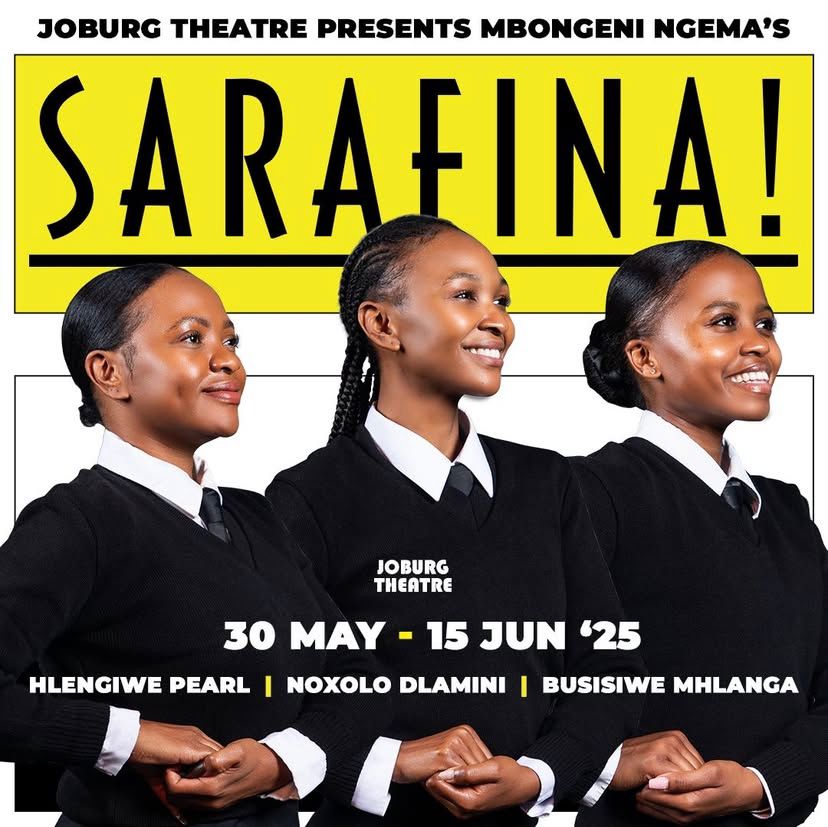
Staged at the Joburg Theatre from May 30 to June 15, 2025, the latest revival of Sarafina—originally conceived, written, and directed by the late Dr. Mbongeni Ngema—is a spirited and technically impressive homage to a theatrical landmark. Under the fresh directorial vision of Mpho Molepo and choreography by Nompumelelo Gumede-Ngema, the production is both a celebration of history and a reimagining that speaks to new generations.
From the outset, the show is a feast for the senses. The live band breathes energy into the theatre with a musicality that feels both reverent and contemporary. The lighting design masterfully sets the tone for each scene, shifting seamlessly between moments of joy, tension, and reflection. Costumes are vibrant and culturally grounded, and the use of minimalist staging—reminiscent of Jerzy Grotowski’s “Poor Theatre”—encourages the audience to co-create the world of Sarafina in their minds, rather than relying on elaborate props.
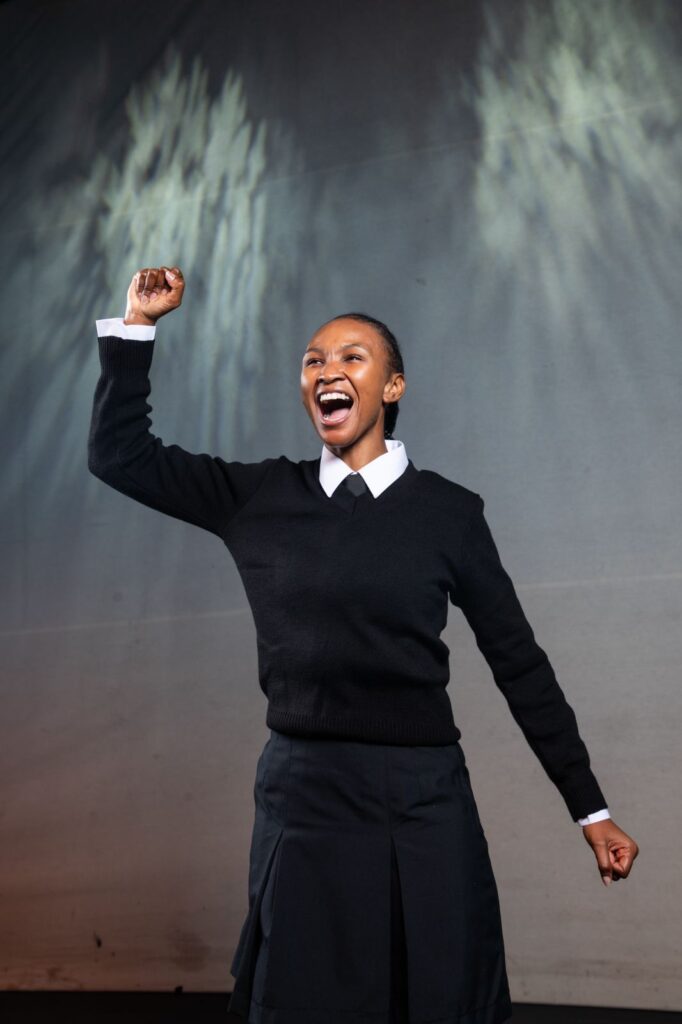
At the heart of the story, Noxolo Dlamini (Noxi) steps into the iconic role of Sarafina with admirable restraint and authenticity. Rather than mimicking Leleti Khumalo, whose original performance remains legendary, Dlamini makes the role her own. She brings a youthful defiance and a grounded sincerity that align with today’s generation of young South Africans—rooted in struggle, yet yearning for expression.
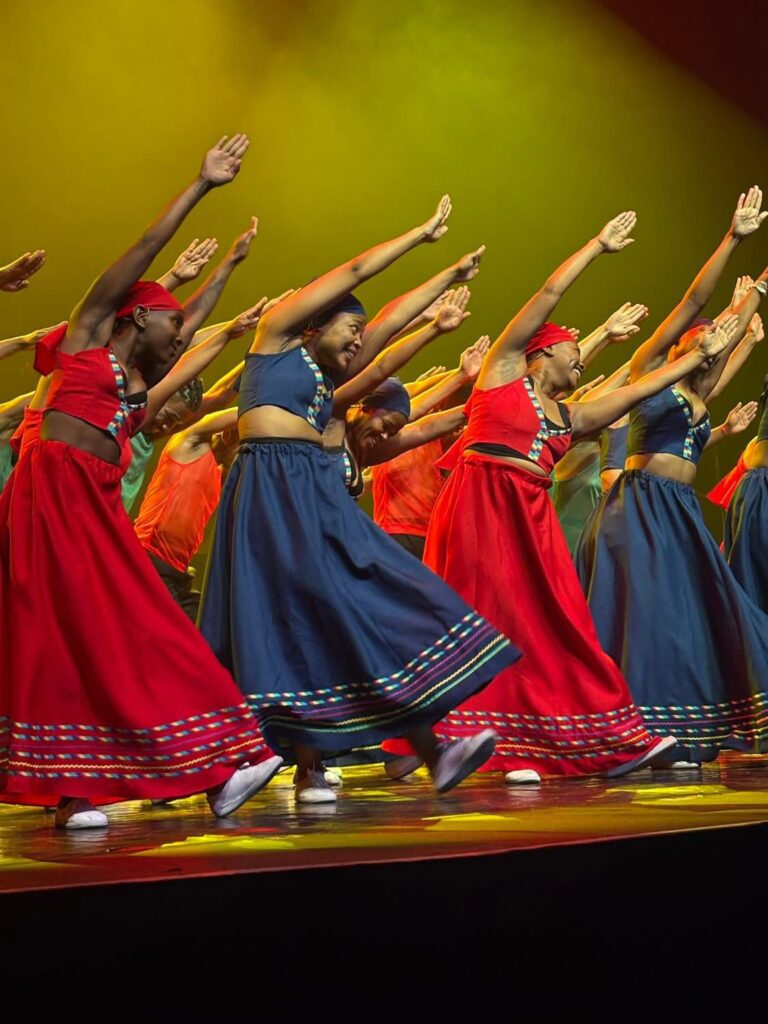
The ensemble is undeniably tight, their vocal harmonies powerful and their physicality magnetic. Gumede-Ngema’s choreography fuses traditional movement with contemporary dance styles, introducing elements of the 2000s that bring a modern pulse to the show. While this may divide audiences—particularly those nostalgic for the original choreography—it adds an intriguing layer of evolution to a play that has always been about change and resistance.
An interesting and effective narrative touch is the use of the narrator as a bell ringer. This character not only links scenes together but also injects a rhythmic, almost ritualistic energy into the performance, bridging the gap between audience and action.
Credit: Kevin Mofu
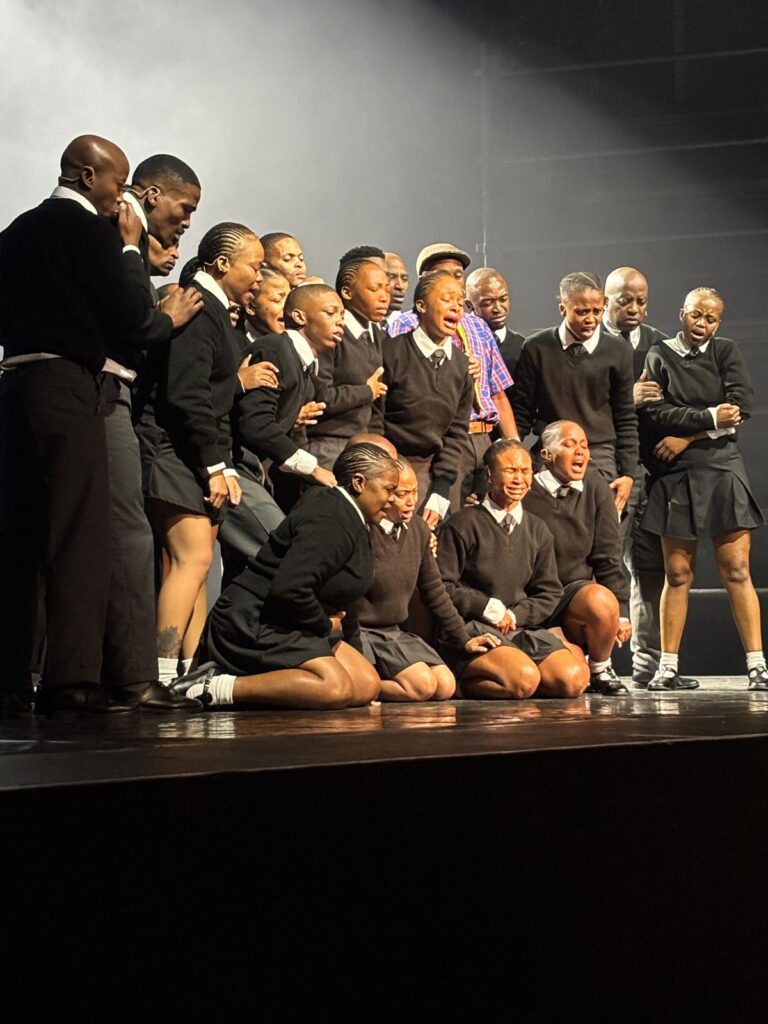
However, the production isn’t without its flaws. While the technical aspects are laudable, emotional resonance sometimes falls short. In particular, the funeral scene—a potentially devastating moment—lacks the gravitas and sorrow one would expect. The absence of visible emotional cues leaves the audience uncertain about the intended tone. Despite a commendable performance from Thato Gwadiso (known to television audiences as Vader on Skeem Saam), who takes on a new and unexpected role as the funeral pastor, the scene feels more performative than poignant.
The actor portraying the teacher maintains control of the character for most of the play, though at times their performance teeters on the edge of overstatement. It’s a fine line between passion and overreach, and here the portrayal sometimes distracts more than it deepens.
Credit: Kevin Mofu
Yet, the production makes a commendable effort to honour the legacy of Sarafina. There are powerful nods to the many individuals who shaped its history—including a clear and respectful acknowledgment of Dr. Mbongeni Ngema’s enduring influence. The Zulu cultural elements woven throughout the production are beautifully rendered, adding texture and authenticity to the story’s context.
This 2025 revival may not carry the raw emotional power of earlier productions, but it undeniably brings a fresh, technically polished, and culturally resonant interpretation to the stage. For audiences—both new and returning—it serves as a vibrant reminder that Sarafina is not just a story of the past, but a living, evolving reflection of South Africa’s ongoing journey.