

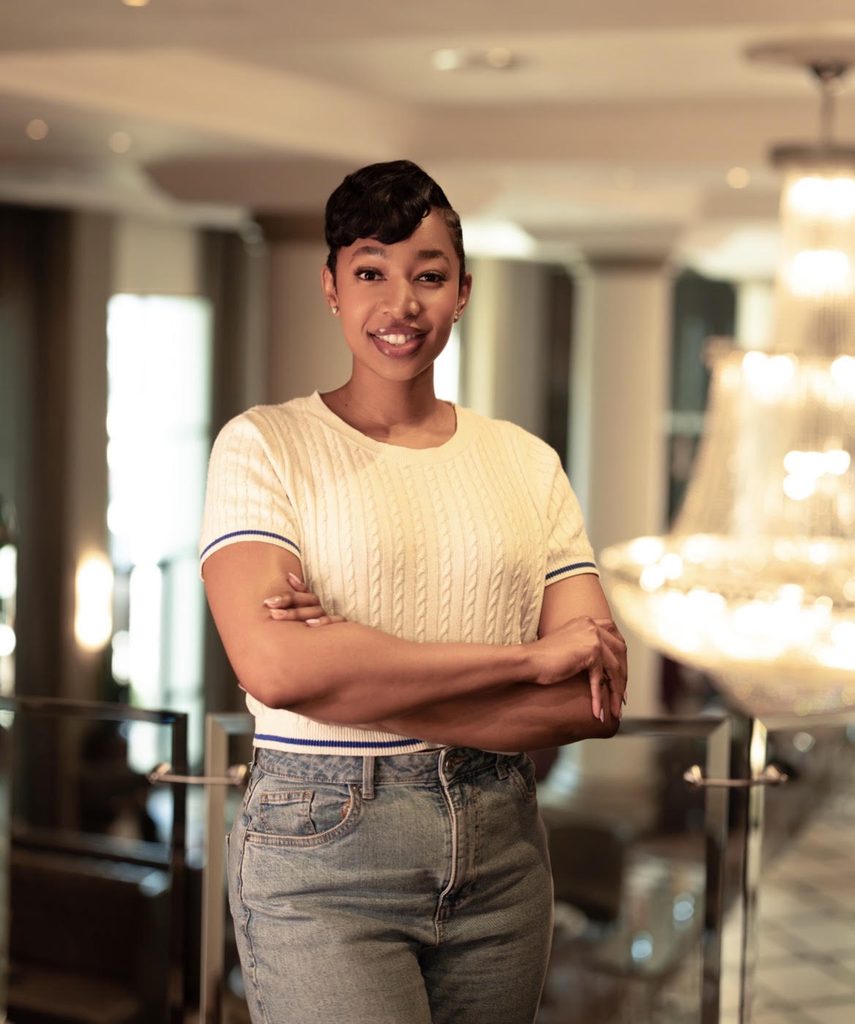
As one of the Top 19 finalists for Miss South Africa 2026, Katlego Malebye stands out not just for her beauty, but for her remarkable journey and vision for empowerment. With the grand finale set for November 14, 2026, at the Sandton Convention Centre in Johannesburg, anticipation is building for a celebration that promises to be both glamorous and impactful. This year’s theme, “From Imbokodo to Diamond,” encapsulates the strength, resilience, and leadership of South African women, drawing from the powerful symbolism of the Imbokodo and the brilliance of diamonds.
Meet Katlego: Beyond the Crown
In a recent conversation, Katlego shared insights into her life beyond the title contender. Here’s a glimpse into her world: Katlego is a 31-year-old architect from Pretoria and the first daughter in her family. Her academic journey at the University of Johannesburg, where she completed her Bachelor’s, Honours, and master’s in architecture, has been transformative. She reflects on how her experiences have shaped her understanding of space, belonging, and identity as a Black woman.
Raised by hardworking parents who fought for educational opportunities, Katlego values authenticity, courage, and the need for progress. She recognizes the paradox faced by many graduates: achieving academic success doesn’t always guarantee employment. Through her experiences, she strives to create pathways for future generations.
What inspired you to enter Miss South Africa 2026, and what does being selected as a Top 19 finalist mean to you?
What inspired me to enter Miss South Africa is the power of the platform and what can be built from it. I see it as a launchpad for change, an opportunity to use the experiences and struggles that shaped me, not as limitations that define my life, but as lessons that can help ensure they do not become another woman’s story. Being selected as a Top 19 finalist brings me one step closer to serving the public in a way I once wished someone could have served me while I was navigating my own challenges. For me, it has never simply been about wearing the crown. It is about the purpose behind it, the people I can reach because of it, and the opportunities I can help create through it.
What has been the most unexpected or transformative part of your Miss South Africa journey so far?
The most unexpected part has been the reality of visibility. You can understand intellectually that Miss South Africa places you in the public eye, but knowing that and living it are completely different. I have always been very private and was not particularly active on social media, so intentionally putting myself out there and allowing people into my story has been transformative. I realised I had allowed privacy to become a mantle of comfort, and beneath that was a fear of being judged, scrutinised or questioned. This journey has taught me that comfort can quietly become complacency and limit our curiosity and growth. I am still working through it, but I am learning to allow myself to be seen while remaining grounded in who I am.
How do you remain grounded and authentic while navigating a high-profile national competition?
I remain grounded by remembering who I was before this journey began and, most importantly, whose I am. My faith and belief in God remind me that my identity is rooted in Christ, not in a title, public opinion or how far I progress in the competition. I am deeply family-orientated and blessed with a sisterhood of beautiful, intelligent and strong women who keep me accountable, hold me to a higher standard and bring me back to my why. Their support has carried me through moments of impostor syndrome, and honestly, my prayer life has kept me sane. My faith, family and sisterhood remind me that growth does not require me to lose myself.
What message would you share with young women who see you as a role model?
You can be technically skilled and deeply compassionate. Being a woman in a male-dominated space is not a weakness, your perspective can help question what already exists and create more innovative and inclusive solutions. You can pursue STEM and still care deeply about social issues. You can be ambitious and still make room for others. You do not have to shrink yourself to belong in spaces that may not have traditionally been created with you in mind. Most importantly, when you find your place in the room, remember that personal success alone is not entirely fulfilling. When your success becomes a pathway for another woman, your impact begins to extend beyond your own story and change the trajectory of generations to come.
Can you share your journey in architecture and what first inspired you to pursue this field?
What first inspired me to pursue architecture was, unexpectedly, The Sims 2. I loved creating families, but once I discovered the Motherload cheat code and had an enormous imaginary budget, I became more interested in designing their homes, changing landscapes and creating interiors. I did not realise then that I was developing an early curiosity for design, space and digital modelling. The Sims 2 sparked my interest in architecture, but professional experience gave that interest purpose. While auditing RDP houses in Port St Johns in the Eastern Cape on behalf of the National Builders Registration Council (NHBRC), I saw living conditions that changed my understanding of what a home means. It made me realise that the spaces we live in can influence how we see ourselves and what we believe is possible. I want to use architecture so that a home is not a reflection of someone’s limitations, but a foundation for dignity, possibility and a way forward.
What do you believe architecture can contribute beyond designing buildings, particularly in addressing social and economic challenges?
Architecture plays a vital role in economic and social development because the built environment is the physical backbone of how society functions. We need places for businesses to operate, homes that offer stability, and infrastructure that connects people to one another and to opportunity. Behind those spaces is an ecosystem of professionals, tradespeople, suppliers and businesses contributing to employment and economic activity. Investing in the built environment is therefore about far more than putting up a roof. A development can create employment, develop skills, support businesses, strengthen communities and improve access to opportunity. For me, we are not simply designing buildings; we are creating infrastructure through which people, communities and economies can move forward.
As a young woman in architecture, what barriers have you encountered, and how have you navigated them?
As a young woman in architecture, I have experienced being overlooked and feeling that my competence was sometimes judged in relation to my appearance rather than the quality of my work. My eagerness to learn and progress professionally also placed me in vulnerable situations where unequal power dynamics could turn that eagerness into something to be taken advantage of rather than nurtured. I learnt that professional growth should never require compromising your boundaries, dignity or sense of self. A turning point was joining the SACAP mentorship programme and being supported by a female mentor who understood some of the realities I was navigating. That experience gave me a safer space to ask questions, gain practical exposure and develop my skills. It is also why mentorship has become so important to Build For Change: I do not just want women to enter the industry. I want them to be nurtured once they get there.
How does your architectural training inform the way you approach problem-solving, leadership and community development?
Architecture has taught me to look at a problem as part of a wider system. A building does not exist independently of the people who use it, the infrastructure around it or the opportunities it can enable. That way of thinking shapes how I approach leadership and community development. I try to understand the relationships between people, place and opportunity before proposing a solution. It has taught me to ask not only what we are building, but who it serves, what problem it solves, and what becomes possible because it exists.
Why do you believe access to safe, dignified and affordable housing is one of South Africa’s most urgent priorities?
My Master’s research, Kairos: Reclaiming Borrowed Time of the Black Figure, examined how apartheid legislation shaped the relationship between Black women, land and belonging. I explored how laws including the Native Trust and Land Act of 1936 and the Bantu Laws Amendment Act of 1964 constrained Black women’s access to land, housing and urban space, with consequences including displacement, overcrowding, restricted mobility and economic exclusion. What makes this urgent is that spatial inequality cannot simply be confined to history. The effects remain visible in housing insecurity, overcrowding and unequal access to well-located land and opportunity. A home is more than a physical structure. It influences safety, dignity, stability, belonging and proximity to opportunity. We cannot change the legislation of the past, but we can take responsibility for the spaces we design today and the future those spaces make possible.
Build For Change is an ambitious initiative. How do you intend to translate this vision into tangible, measurable and sustainable change?
For me, tangible change starts with turning the vision into clear pathways and measuring what happens because those pathways exist. On the women’s development side, I want to track more than participation. Did a woman gain experience, find employment, develop professionally, progress towards registration, become an innovator or leader, and eventually create opportunities for someone else? On the built environment side, impact should be measured not only by the number of homes or people reached, but by whether interventions improve dignity, safety and quality of life while creating skills, employment and economic opportunity. Sustainability means building an ecosystem of industry partnerships, mentorship, skills development, employment and entrepreneurship, while growing the built-environment side into a model that can generate economic value and reinvest it into further impact. Ultimately, Build For Change is a cycle. Graduates become professionals, professionals use their skills to strengthen communities, and those professionals become leaders who nurture the next generation. The cycle comes full circle when the woman we once created a pathway for becomes the woman creating pathways for others.
By embracing her platform and the message of empowerment, Katlego Malebye embodies the spirit of resilience and strength that the Miss South Africa pageant seeks to celebrate. As the nation awaits the crowning of the next Miss South Africa, Katlego’s journey serves as a reminder of the power of purpose-driven leadership and the impact one woman can have in her community and beyond. As the finale approaches, keep an eye on Katlego Malebye; she is not just a contender for the crown but a catalyst for change.